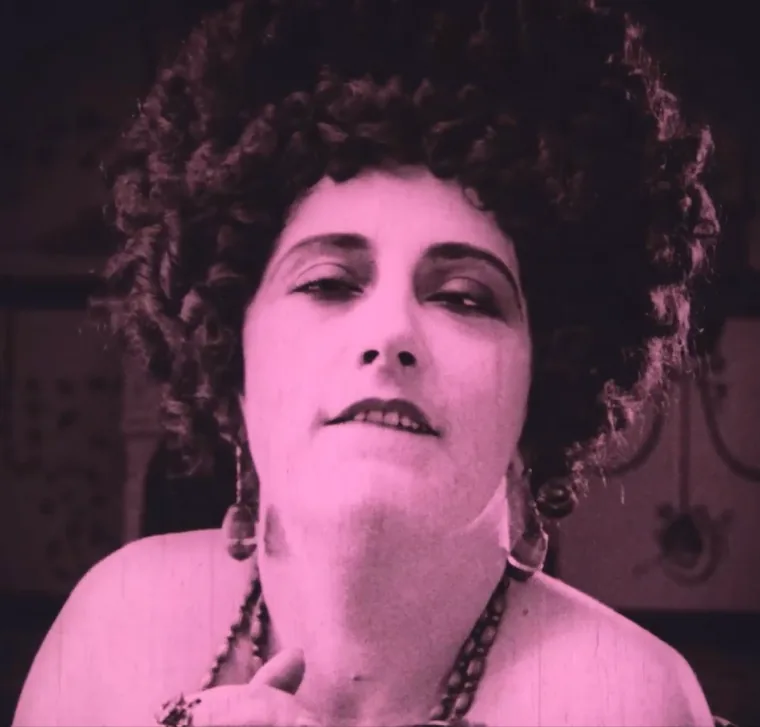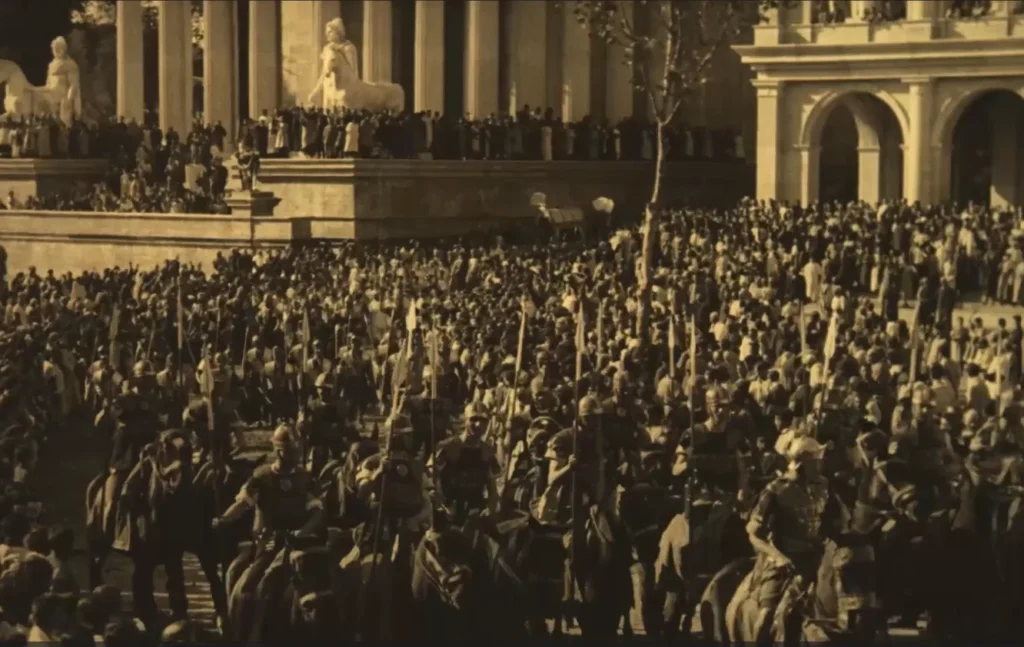

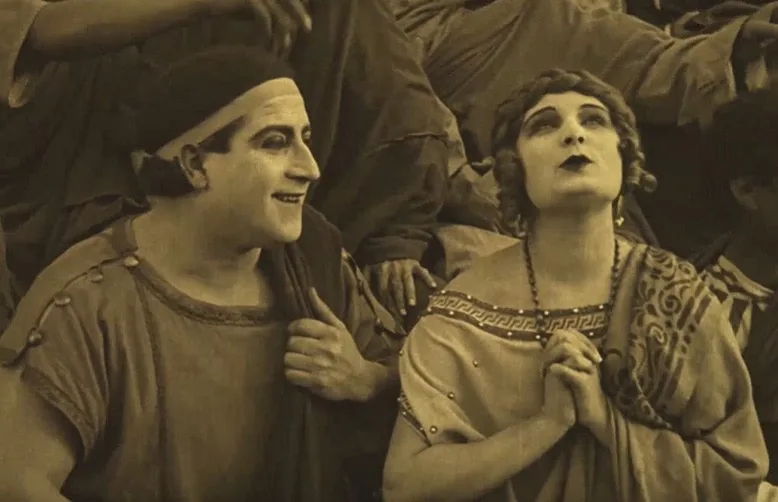
Thanks to the restoration work carried out by the Cineteca Milano laboratory, Messalina, a silent epicproduced by Guazzoni Film and starring Rina De Liguoro in the lead role, is back on the big screen. After raising funds, proceeding in small steps and being forced to halt and resume production several times, in 1923 – after ten years of attempts – Enrico Guazzoni finally achieved his goal: to tell the story of Messalina, wife of Emperor Claudius, amidst palace intrigues, rivalries and forbidden loves. The screenplay, written by Guazzoni himself, is complemented by cinematography by Victor Arménise and Alfredo Lenci and set design by Guido Del Monaco.
The film arrives at a difficult time for Italian cinema, now overwhelmed by competition from Hollywood, and is part of the series of historical epics with which the industry is seeking to find success beyond national borders. And indeed, after enjoying moderate success in Italy, Messalina really made its mark abroad, being released in English-speaking countries under the title The Fall of an Empress and even reaching the Soviet Union, the only Italian film to be imported there in the 1920s.
Messalina’s grandeur is conveyed through her story and amplified visually, showcasing the vision of a director who used to paint scenes before turning to film, and who succeeded in bringing monumental sets and a vast number of extras to the screen, as a result of a keen artistic sensibility. The stop-start production process, however, has unfortunately left its mark: critics at the time described it as a disjointed production, with some of the key episodes appearing disconnected from one another. In the years that followed, the film, full of scenes of nudity and violence, also fell victim to censorship. But that world has now been recovered: the 2K restoration carried out by Cineteca Milano has finally reconstructed the most complete version of Messalina available to date, with a total running time of 128 minutes.
Film restoration: all the stages of a six-month project
To gain a deeper insight into the restoration process of Messalina and discover some of the anecdotes and unique features that characterised it, we spoke to the restorer Giulia Marsella from the Cineteca Milano workshop.
The starting point for the project, which lasted six months, was a comparison of two 35mm copies, of differing lengths, held in the Cineteca Milano archive. These were supplemented by a black-and-white duplicate negative from the Centro Sperimentale di Cinematografia in Rome, from which the poignant epilogue was recovered, and a colour print from the Cineteca di Bologna, which held only the censored sequences, now included in this new edition. Crucial to the philological reconstruction of the plot was the consultation of critical reviews published in newspapers of the time, which provided a detailed and comprehensive synopsis.
With the utmost respect for the original materials, the aim of the restoration work was to reproduce the original’s appearance as faithfully as possible. As Giulia Marsella explained, some excessively damaged frames were removed; a similar process was applied to certain captions, which are essential to understanding the plot, and these were subsequently replaced with new versions digitally recreated to replicate their distinctive features.
The enhanced visual quality allows the enchanting shades of colour, which served as a narrative function in silent cinema, to envelop the viewer and deepen their engagement with the plot. Not only that: the improved definition enhances the astonishing camera movements and ingenious staging techniques, which reach their climax in the chariot race sequence – so spectacular that it inspired the famous film Ben-Hur.
The film was then scanned in 2K, digitally restored and stabilised, and has been chosen to close the 2026 Piccolo Grande Cinema Festival – on November 15th at the Cineteca Milano MIC cinema – with live musical accompaniment by Gino Lucente, who composed the film’s new score.