
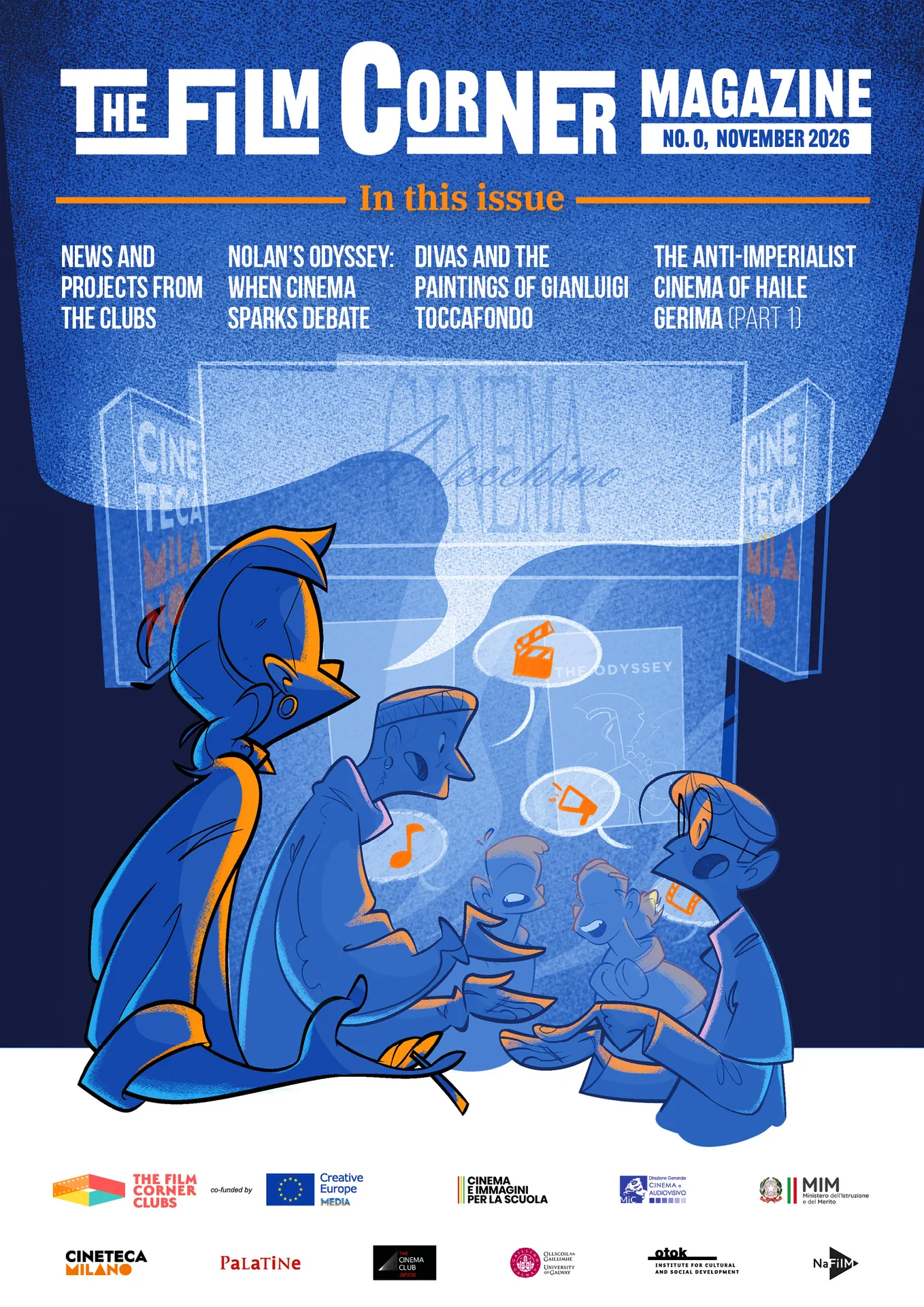
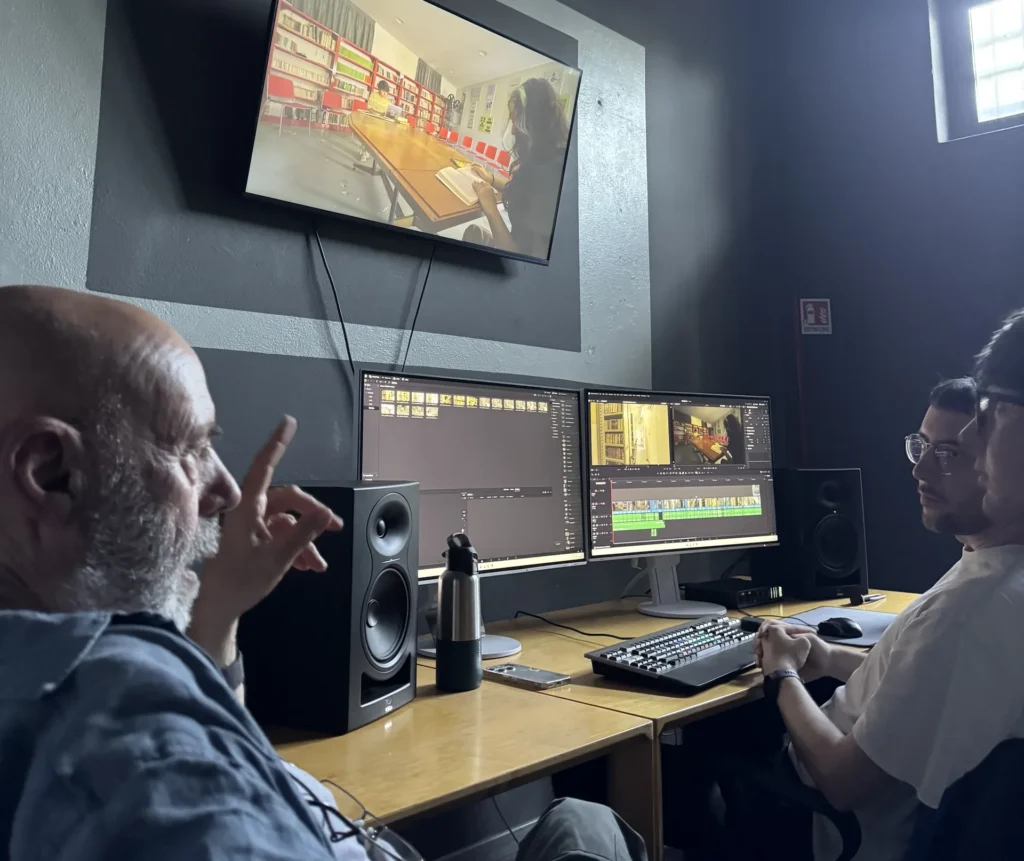
No professional camera, no lights or microphones on set. No storyboard to limit the actors’ performances. During the workshop held by the award-winning cinematographer Luca Bigazzi from September 21st to 24th at the Biblioteca Morando of Cineteca Milano, the only tools available were two iPhones, two ND filters, external storage drives, and grips to extend their functions and make them easier to handle. The choice of the maestro Bigazzi, a longtime collaborator of Paolo Sorrentino and of other leading figures of Italian cinema such as Francesca Comencini and Silvio Soldini, serves a precise goal: to make filmmaking more accessible so that more projects can actually get made.
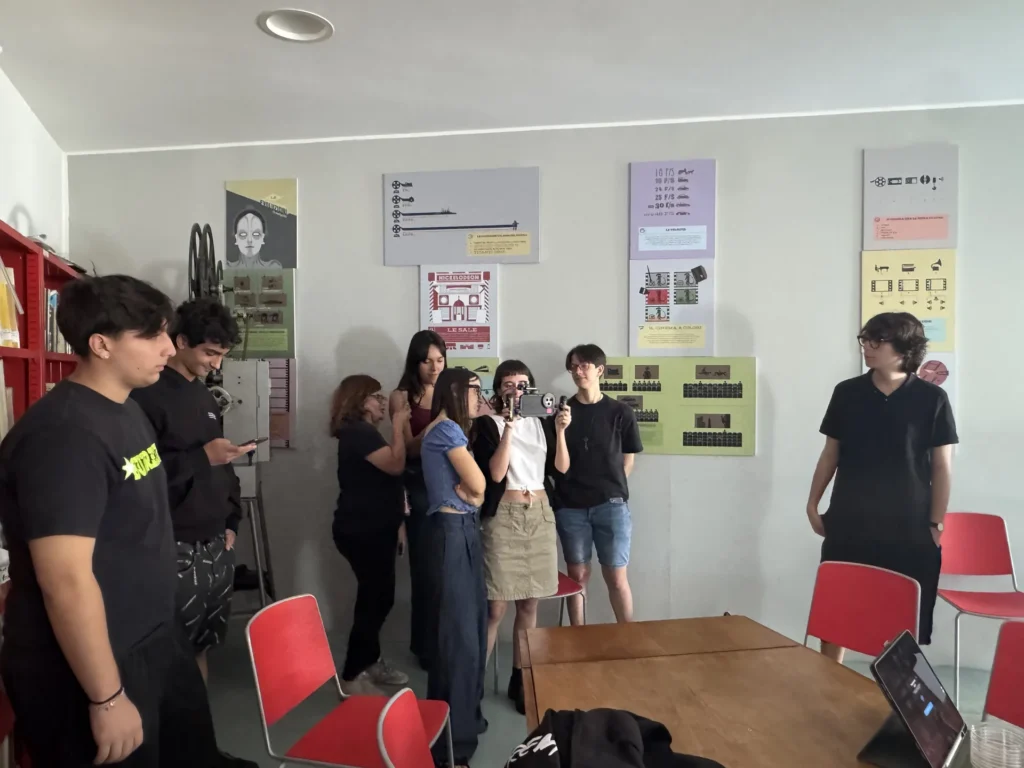
By following every stage of development, from pre-production to post-production, the 15 boys and girls in attendance gained a hands-on understanding of the potential and limits of the iPhone as a filming tool. Indeed, although it is not an especially easy device to use, it offers some significant advantages, including greater freedom of movement in interior spaces.
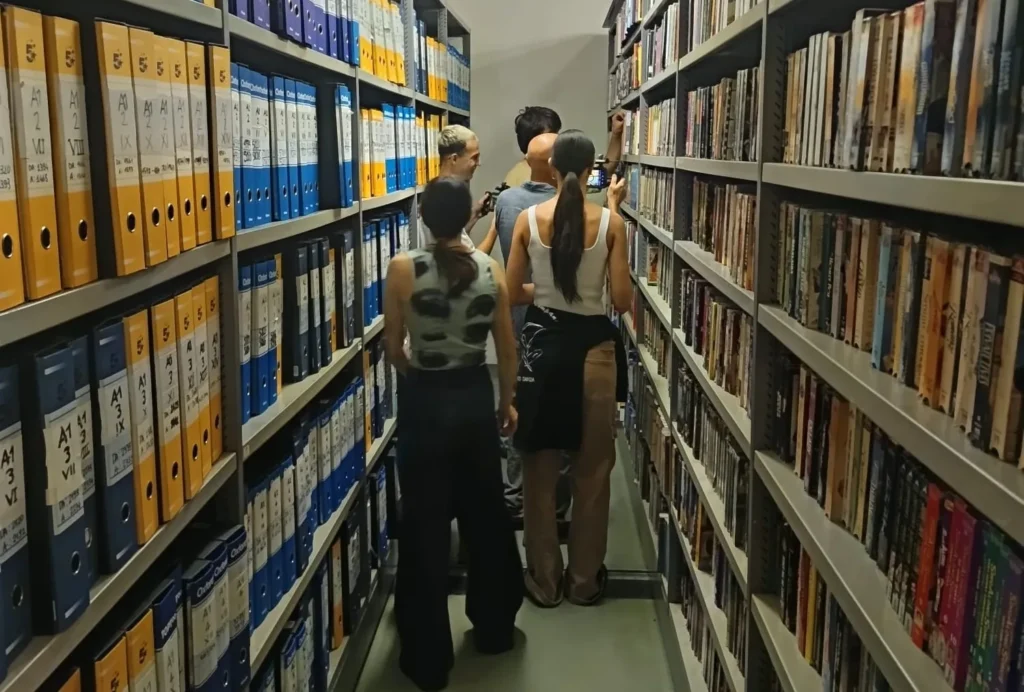
The short film, which blossomed from the harmonious collaboration between the ingenuity of the participants and the skilled and genial hand of their teacher, deals with the performance anxiety of a screenwriter desperately searching for inspiration. The torments of his psyche, told with a comic touch, are finally healed by a young woman who, by inviting him to a cineforum, reminds him of the playful side of the seventh art.
In a short but immersive workshop, an everyday object like the iPhone proved it can elevate itself into a tool of expression capable of giving shape to the ideas of young talents. The cinematographer parted from them with this piece of advice: always find a way to put yourselves on the line, making your voices heard and thereby helping to bring out the cultural richness of your generation.
Who is Luca Bigazzi
Luca Bigazzi (Milan, 1958) is one of the most important cinematographers in Italian cinema. He made his debut in 1983 with Silvio Soldini’s Paesaggio con figure, beginning a long working relationship with the director, and has built a career marked by collaborations with filmmakers such as Gianni Amelio, Francesca Archibugi, Carlo Mazzacurati and, above all, Paolo Sorrentino, from The Consequences of Love to The New Pope.
He has won seven David di Donatello awards, a record, and eight Nastri d’Argento. With The Young Pope, the series directed by Sorrentino, he became the first Italian cinematographer nominated for an Emmy Award for Outstanding Cinematography for a Limited Series or Movie.