
Every project comes from a meeting
by Paolo Sampugnaro
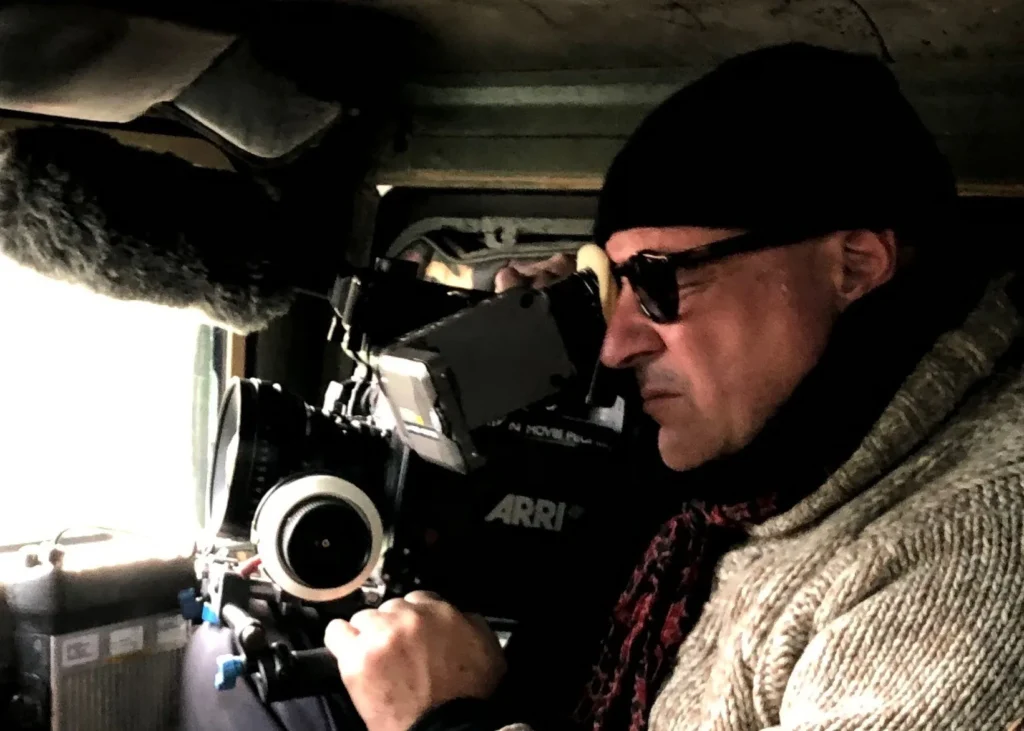
After a ‘chase’ lasting several years, Cineteca Milano has finally managed to welcome director Gianfranco Rosi – one of the leading documentary filmmakers currently working – as a guest. He took part in a discussion as part of a retrospective of his films, during which the conversation centred on cinema, documentary filmmaking and the relationship with reality.
During the meeting, the director spoke about his approach to filmmaking, discussing the technical aspects and his creative choices, such as the distinctive absence of a proper screenplay. The aim is to capture reality as it is, and then give it a new form. But there are many other unique elements that characterise his work; even before the very idea of a film, there is an event from which Rosi’s entire creative process originates: the encounter.
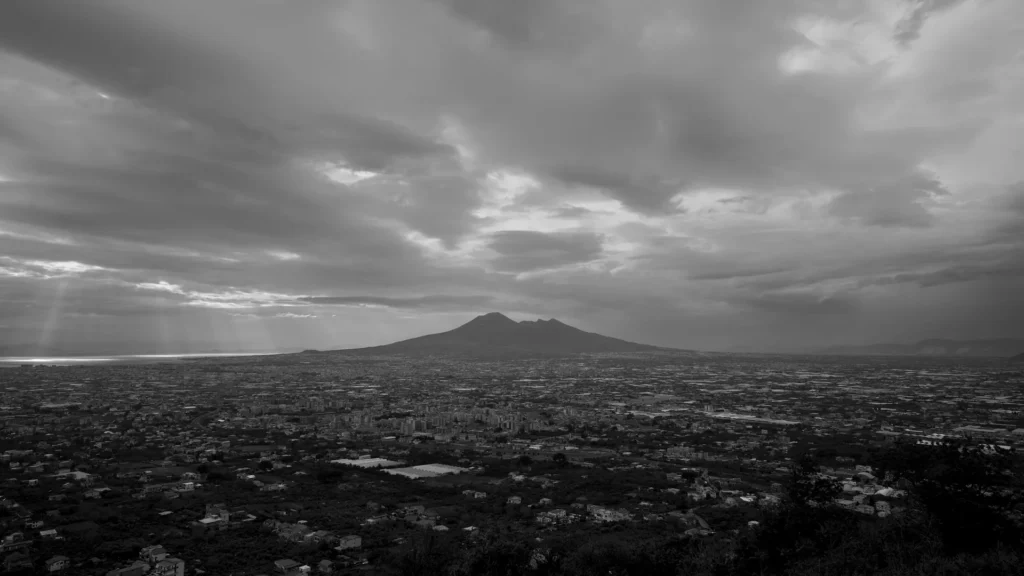
Let us consider his latest film, Pompei: Below the Clouds, in which the director portrays and captures Naples through a variety of contexts and entirely different characters, exploring numerous aspects of everyday life. Whilst Rosi was visiting the National Archaeological Museum of Naples, the turning point came when he met a researcher who granted him access to the museum’s underground storerooms (which had been inaccessible during the film’s location scouting), where artefacts spanning 3,000 years of history are housed. Witnessing this heritage of art and history provided the spark that gave birth to the project, to the extent that in Pompei: Below the Clouds Rosi made extensive use of the museum spaces to explore the stratification of time and all the memories that remain buried. This whole chain of ideas and images stemmed from a single encounter that proved to be the key to the creative process.
Another fundamental element in Rosi’s cinema is his unique and extensive use of off-screen space. For the director, what is unseen and unspoken are the true focal point of his work, and what is filmed and shown on screen is nothing more than a sincere reflection of those moments of life captured but not subsequently re-enacted: if cinema is about speaking through images, evoking the ‘absence’ of an element in a given context raises even more questions, leaving the viewer with a deeper impression that will allow them to reflect on and explore what they are watching in greater depth.
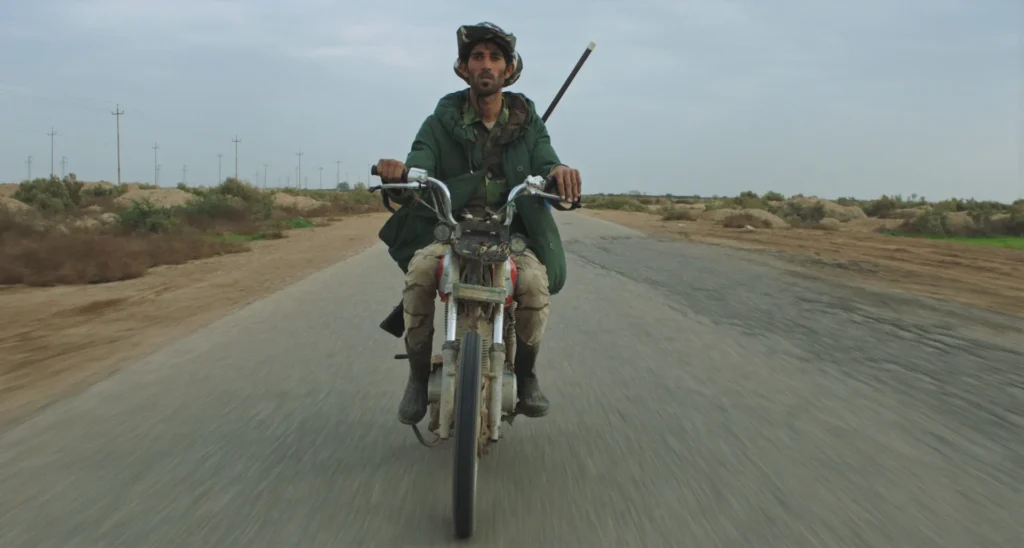
As a great storyteller, Gianfranco Rosi has never confined himself merely to observing what is happening in the world, but has always managed to immerse himself in the cultures and contexts he has explored in depth over the years and that have subsequently led him to create works such as Fire at Sea, about migrant landings on Lampedusa, or Notturno, about the lives of those living in the Middle East. Gianfranco Rosi is currently working on a documentary set in Libya, with the aim of bringing the trilogy that began with Fire at seaand Notturno to a fitting conclusion.
The expressive power of the ‘off-screen’
by Orson Mariani
The shot, the portion of reality shown, is the very essence of cinema: you cannot make a film without at least one shot. This certainty does not seem to hold true for the Italian director Gianfranco Rosi, who believes that the fundamental element of his work is what lies off-screen, the portion of reality that is not shown. How can cinema renounce the very component without which, technically speaking, it could not even be called cinema?
During the masterclass held at the Arlecchino cinema, Gianfranco Rosi himself attempted to answer this question, sharing his vision of cinema and his working method.
According to the Italian director, his work is a profound encounter with reality, which reveals itself to him gradually and which he must listen to patiently.
To establish this close connection with it, Rosi immerses himself in it completely, living first-hand at the filming location for an extended period. For a film of standard length, between ninety and one hundred and twenty minutes, the Italian director requires several years of filming, shooting not every day and not all day: the discrepancy between the running time of one of his films and the time taken to produce it is therefore enormous.
This unconventional approach to filmmaking reveals the significance that filming holds for Rosi: an inevitable yet insufficient consequence of the relationship between the Italian director and reality, the true essence of which lies not so much in the life depicted within the frame, but in that which is deeply absorbed – the off-screen realm – something we shall never see.
Chi è Gianfranco Rosi
Gianfranco Rosi is regarded as one of the leading figures in ‘cinema verité’. To make his films, Rosi often spends long periods of time living amongst the communities he films.
His most important works include Boatman (1993), Below Sea Level (2008), Sacro GRA (2013) and Fire at Sea (2016). With Sacro GRA, he won the Golden Lion at the Venice Film Festival in 2013, whilst Fire at Sea, which explores life on Lampedusa and the phenomenon of migration, won the Golden Bear at the Berlin Film Festival in 2016.
In 2020, he released Notturno, filmed in the Middle East, and in 2025 he made Pompei: Below the Clouds, dedicated to Naples.