
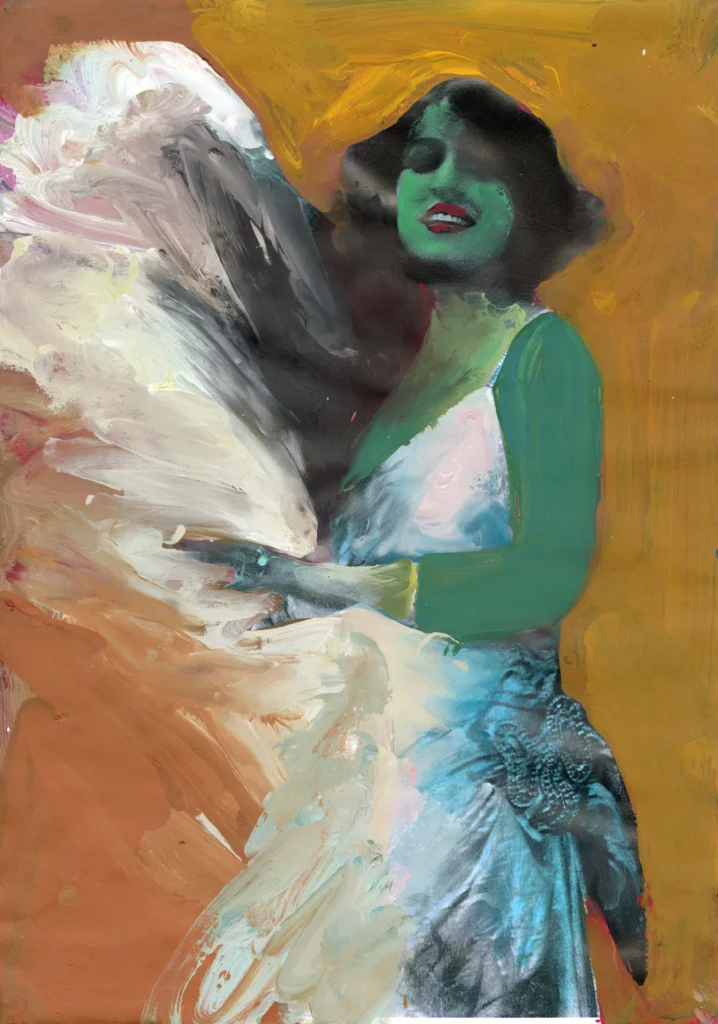
The great divas of Italian cinema have returned to captivate the people of Milan, more than a century after their time of worldwide fame. At the Interactive Museum of Cinema in Milan, the exhibition “The First Stars: The Italian Divas Who Captivated Cinema”, curated by Gianluigi Toccafondo and Cineteca Milano, will be on display until the 7th of March 2027.
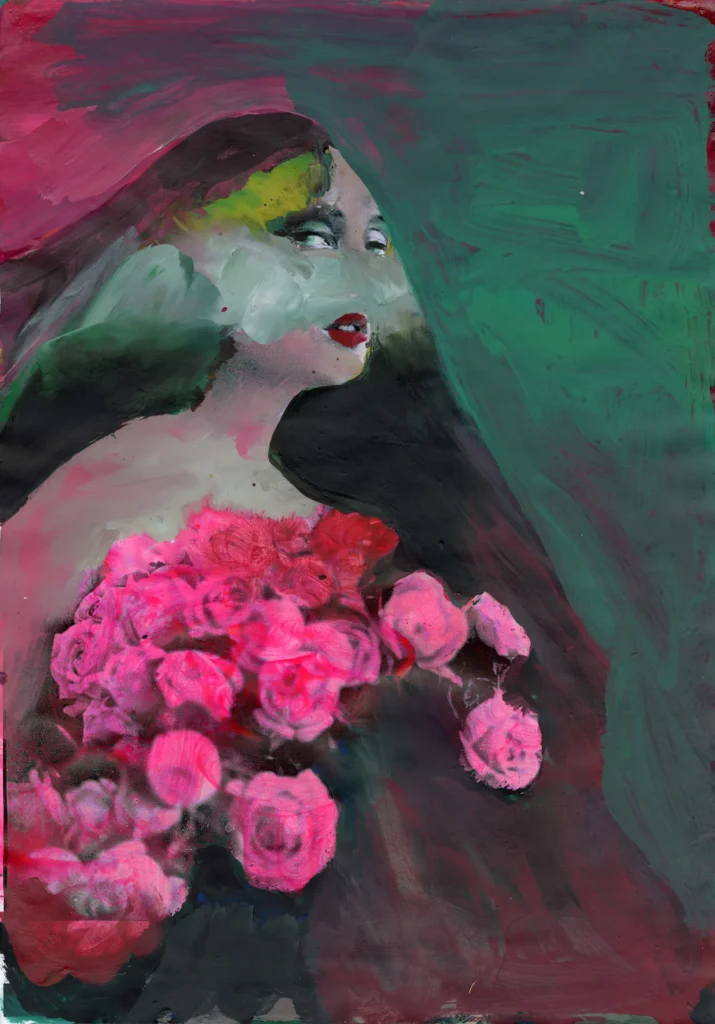
The exhibition is divided into two main sections. One is devoted to the original negatives from the 1910s and 1920s, depicting the most important stars of Italian silent cinema, such as Lyda Borelli and Pina Menichelli; the photographs come from the Vico D’Incerti collection, one of the earliest supporters of the Milan Film Archive, whose collection of period images is held in the Foundation’s archives. In the main section, these photographs are brought to life and transformed into paintings by the great artist, painter, animator and film director known throughout the world.
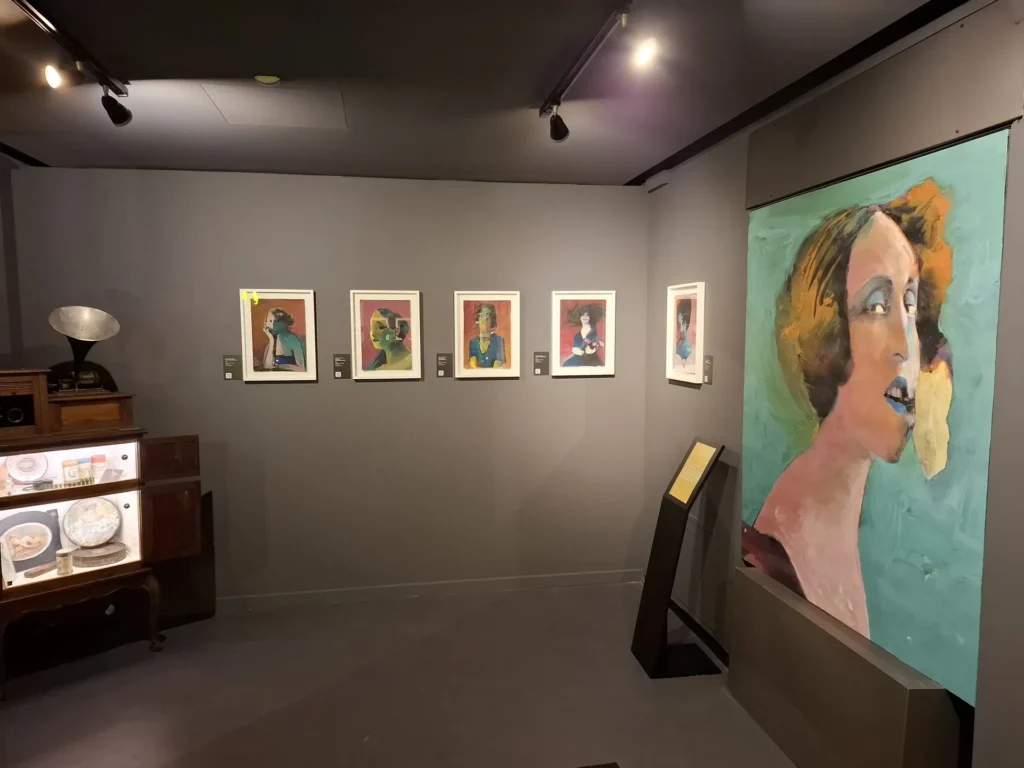
In addition to the photographs and paintings, various digital devices and tools have been installed in the museum’s galleries to enable visitors to immerse themselves fully in the history and themes explored by the exhibition. Alongside the traditional video cassettes in the museum’s two interactive cabinets, which contain various films from the Cineteca Milano archive, two new sets have been introduced: one dedicated to film clips from the 1910s that best represent the ‘divismo’ era, and the other containing excerpts from Toccafondo’s animated works, ranging from independent short films to opening sequences and adverts, which are displayed on the panels along the main corridor. Also on display are all 200 illustrations that the artist from San Marino used to create the new opening sequence for Cineteca Milano, which has been screened in the auditorium before all the films in the programme for some time now.
The exhibition “The first stars”, however, features an extensive film section. “Double Dream” is, in fact, the title of the film programme accompanying the exhibition. Until February 19th, the MIC cinema will host a wide selection of films, composed by titles suggested by Toccafondo himself and that have made the greatest artistic impression on him; the programme also includes films chosen by the Cineteca to honour the artist. The films are preceded by screenings of Toccafondo’s short films. The selection includes timeless classics such as Victor Fleming’s The Wizard of Oz and Stanley Kubrick’s The Killing, as well as more experimental films such as René Laloux’s Fantastic Planet and Richard Kelly’s Donnie Darko, alongside two masterpieces of Italian cinema, Mamma Roma and The Hawks and the Sparrows by Pier Paolo Pasolini, in a section dedicated to the genius of Totò, which will be screened during the end-of-year festivities.
Italian stardom in the 20th century
In the early decades of the 20th century, the phenomenon of stardom took hold in Italy, with certain actors and actresses becoming true icons, known throughout the peninsula and beyond. The mere mention of their name on a film poster was enough to draw thousands of admirers into the cinemas. Stardom originated as a theatrical phenomenon during the 19th-century era known as the ‘age of the great actors’. In the nineteenth century, theatre productions were built around a strong central figure, played by actors whose fame extended beyond the theatre itself to become part of Italian popular and iconographic culture. It was the actors and actresses who drew audiences to the theatre, rather than the play itself. The phenomenon was widespread throughout Europe but particularly so in Italy, a country that boasted one of the most famous theatre actresses in history, the Divine Eleonora Duse.
With the advent of cinema, the phenomenon of divas reached unimaginable proportions. With a single film, screen actors and actresses could reach a wider audience than a stage actor could in an entire career. Several theater divas (such as Sarah Bernhardt or, to a much lesser extent, Duse herself) lent themselves to acting in front of the camera, without achieving the same success as their stage performances because of the difference in language between the two media. The film landscape thus came to be populated by new names and faces who captivated an entire generation.
Italy is once again playing a key role in the spread of this phenomenon. The melodrama is regarded as the first ‘diva film’ in Italian history Love Everlasting directed in 1913 by Mario Caserini and starring the legendary Lyda Borelli, making her big-screen debut. The film was a huge success and catapulted Borelli to fame. The acting of silent-film stars was characterised by a distinctive and recognisable style of gesture and expression, with great attention paid to the expressiveness of the face. The diva’s image was also shaped by the characters she portrayed, as in the case of Pina Menichelli; the actress first came to the attention of the general public in 1915 in The Fire by Giovanni Pastrone, in which she plays a cruel and sensual poet. The film’s success established Menichelli as the quintessential Italian femme fatale, reprising the same role in subsequent films such as The Royal Tigress (1916), again in collaboration with Pastrone.
A painter in dialogue with cinema
Born in San Marino in 1965, Toccafondo is one of the most original figures in contemporary Italian animation. Since 1989, he has forged a career that has left its mark on both arthouse cinema and popular culture and advertising: from the opening sequence for the Venice Biennale to the animated logo for Fandango and the advert for the Japanese brand United Arrows. He collaborated with Ridley Scott on the animated opening sequences for Robin Hood and Gladiator II and served as assistant director to Matteo Garrone on Gomorra. In 2022, he also won a Nastro d’Argento for his short film Dreamland.
Toccafondo has never made any secret of the fact that he is a die-hard fan of silent cinema, particularly American comedies. In his very first short film, The Tail (1989), the first in a long series of films made in collaboration with Mixfilm, he in fact used several photocopies of stunts performed by the famous Buster Keaton, photographed directly from a cathode-ray tube television screen.
The photocopies were moved whilst exposed to the light from the photocopier, so as to produce elongated and distorted images or to bring certain details into focus. They were then laid out on the workbench and used as actual canvases on which to paint.
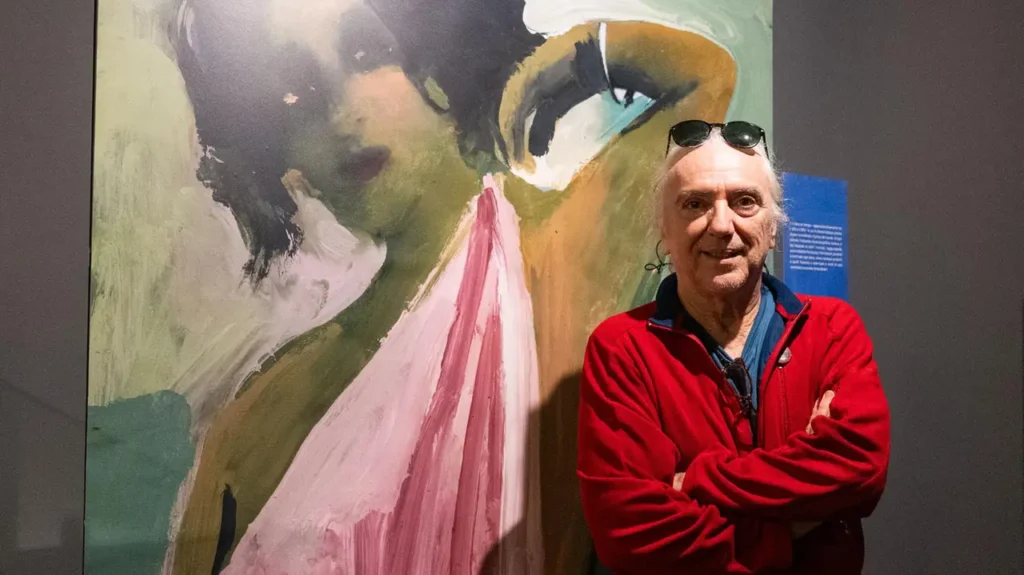
“I’ve always faffed about with magazine covers and photographs; a blank sheet of paper has always made me feel uneasy, a bit like a free-choice essay at school”
— Gianluigi Toccafondo
Toccafondo’s style is often associated with the so-called ‘Neo-Pictorial Movement’, alongside filmmakers such as Simone Massi, Roberto Catani and Ursula Ferrara. What these filmmakers have in common is their explicit use of painterly techniques as the basis for animation, accompanied by a ceaseless process of metamorphosis of forms.
Toccafondo loves to continually rework his pieces, altering certain details or adding layers of colour, until only a few traces of the underlying colours remain visible in the final layer. In this way, the creative process remains visible within the work itself, almost as if to bear witness to the constant changes and transformations it has undergone. This technique has its roots in the artist’s childhood, spent in his father’s pottery workshop. Watching the circular movement of the clay as it was being worked, Toccafondo was struck by the constant shifting of forms, and thus developed the idea of creating figures capable of constantly transforming themselves.
In the short film The Dance Floor (1991), Fred Astaire and Ginger Rogers are photocopied, frame by frame, whilst they dance. What begins as an elegant and refined dance gradually transforms into an animalistic tango, culminating in the metamorphosis of the two actors into animals. Toccafondo creates liminal figures, characters who constantly cross the boundary between the human and animal worlds: these are figures that stretch, distort and reassemble themselves in a continuous, dreamlike visual flow.