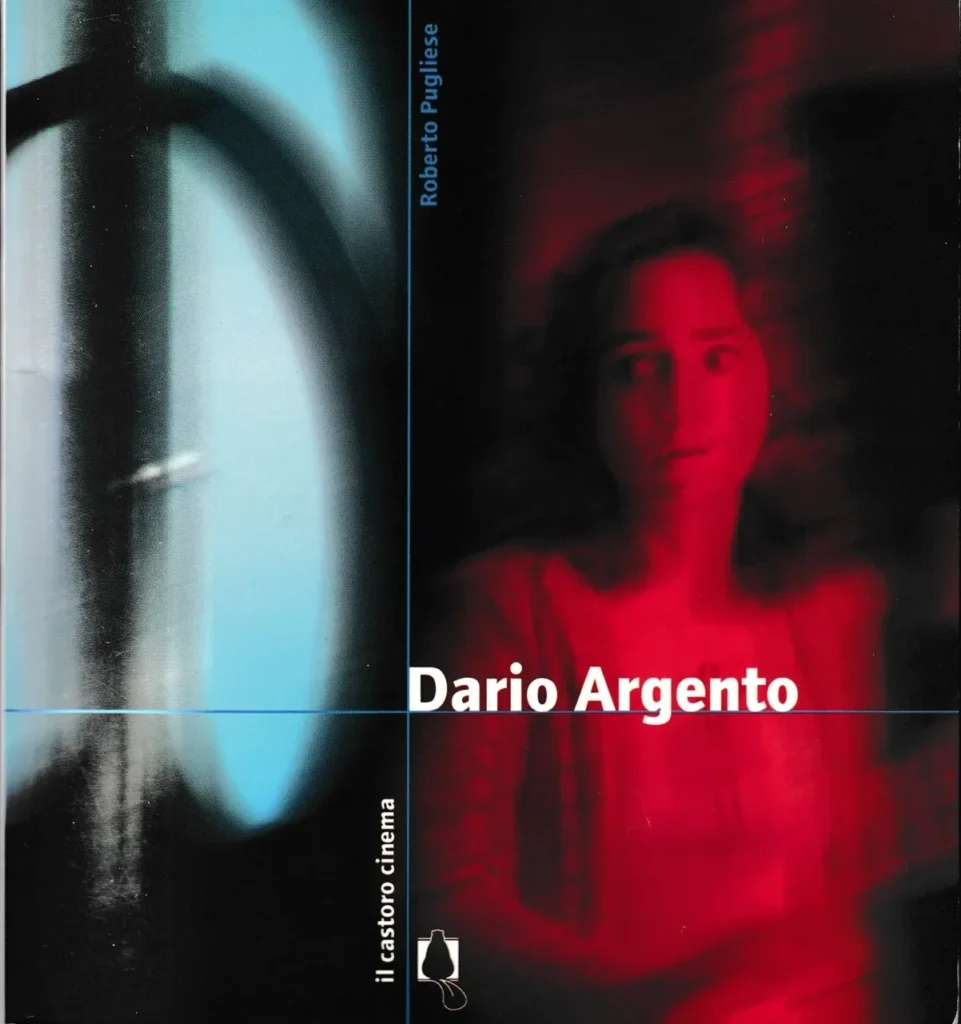
In 1974, the historian and film critic Fernaldo Di Giammatteo founded the Il Castoro Cinema series – a collection of monographs on the works of the world’s greatest film directors – inspired by the eponymous series dedicated to literary authors and published by the Venetian publishing house La Nuova Italia. From the outset, the series was characterised as a hybrid between a magazine and an essay, enjoying commercial success and widespread acclaim.
Following a setback caused by falling sales, the series recovered in 1993 thanks to the founding of Editrice il Castoro. The relaunch was once again spearheaded by Di Giammatteo, who remained editorial director until issue 204, when he was replaced by Renata Gorgani. Under both editors, a diverse editorial approach was championed, evident both in the names of the filmmakers discussed and in those of the volume’s editors: within the same series, the minimalism of Yasujiro Ozu, the humour of Woody Allen, the dreams of Walt Disney and the nightmares of Dario Argento coexist; the authors of these essays find common ground between film theory, history and film criticism – disciplines and personalities that have enriched cinema through the virtuous synergy of differing sensibilities.
Among the impressive list of writers, all of them sublime, the following stand out: the critic Morando Morandini (to whom the library in Via Tofane, run by Cineteca Milano, is dedicated), the ‘Cinemaniaco’ Professor Gianni Canova, the eclectic creator of the television programme Blob, Enrico Ghezzi, the director of the Venice International Film Festival, Alberto Barbera, and the Sterling Professor of Humanities and Film and Media at Yale, Francesco Casetti.
Another defining feature of Il Castoro’s history was its format: small, information-packed squares, numbered from issue 1 on Michelangelo Antonioni to issue 236 on Steven Spielberg, which swing with ease between biographical details, plot summaries and critical analyses, accompanied by stills; at the end of each volume, there is a complete filmography of the director and a bibliography.
The latest publication in the series, the volume dedicated to Spielberg, dates back to 2014 (Il Castoro now specialises in books for children and young people). What remains is the depth of the rigorous and passionate approach that has shaped generations of scholars and marked a milestone in Italian cinema publishing. Any young person wishing to understand the genius of the great directors must turn to Il Castoro Cinema because, in the words of the scholar and critic Roy Menarini, these books ‘force us to escape the urgency of weekly releases and to place the film within a longer history’.